The Best Chest Workout With Only Five Moves

The best chest workout with only five moves will build your upper body without wasting your time in the gym. You do not need ten different cable exercises to grow a full chest. Five basic lifts, done with good form and hard effort, will get the job done every single time.
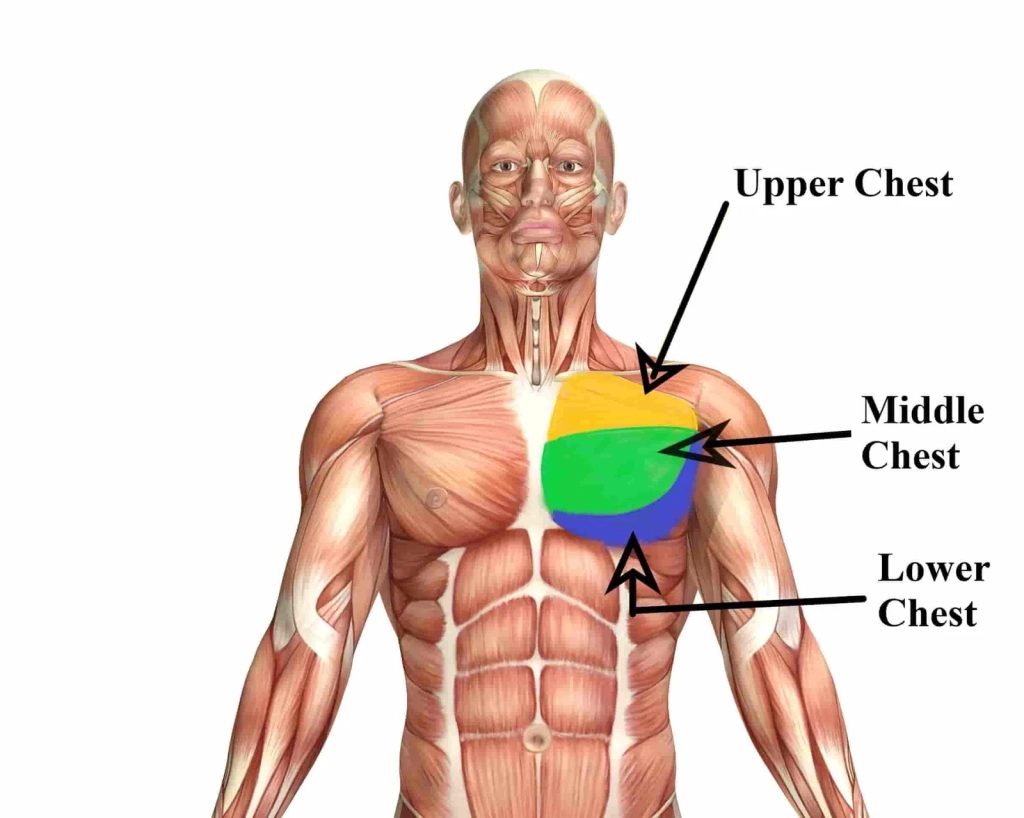
To hit every part of your chest, you need to push from three angles. You press up on an incline, straight across on a flat bench, and finish with a fly movement to stretch the muscle. Add a heavy dip, and your workout is complete in less than 45 minutes.
Why Five Moves Are All You Need
Many lifters spend two hours doing endless chest exercises until their shoulders burn. Your chest is actually a simple muscle group. It has two main heads: the upper section near your collarbone and the large lower section across your ribcage.
When you overload five main movements, you can track your weights easily. If you bench press 135 pounds this month and 155 pounds next month, your chest will grow. Adding six more machine variations just drains your energy and slows down your strength gains.
Focusing on a few strong movements is the base of real strength training. It keeps your mind focused and keeps your joints safe. Let us walk through the exact routine, complete with your sets, reps, and rest periods.
1. Incline Dumbbell Bench Press
Start your workout with the incline press while your muscles are fresh. Set your bench to a 30-degree angle. If the incline is too high, your shoulders take over the work and your upper chest loses out.
Pick up a pair of dumbbells and sit down. Kick the weights up to your shoulders using your knees. Plant your feet flat on the floor, pull your shoulder blades together, and keep a small arch in your lower back. Press the weights straight up, stopping just short of locking your elbows.
Lower the dumbbells slowly for two full seconds until you feel a good stretch across your collarbone. Pause for a second at the bottom. Do 4 sets of 8 to 10 reps. Rest for 90 seconds between sets. If you can do 10 reps on your last set, move up five pounds next week.
2. Barbell Flat Bench Press
The barbell bench press is the king of mass builders. After working your upper chest, move to a flat bench to load your middle chest with heavier weight.
Lie down so your eyes sit right under the bar. Grab the bar with your hands slightly wider than shoulder width. Unrack the weight, pull your shoulders back, and tuck your elbows at a 45-degree angle to your body. Do not flare your elbows straight out to the sides, as that pushes the load into your rotator cuff.
Lower the bar to the middle of your sternum in a straight line. Touch your shirt gently without bouncing the bar off your chest. Drive through your feet and press the bar back up. For safety, always use a spotter or set the safety bars on a power rack when pressing heavy weights.
Perform 3 sets of 6 to 8 reps with a heavier weight. Take a full 2 minutes of rest between sets so your chest can recover fully. You can read more about tracking your strength progress on our gym workout guide page.
3. Parallel Bar Dips
Dips target the lower chest and your triceps hard. They act like a standing decline press, but they use your full body weight.
Grab the dip bars and push yourself up to the top position. To target your chest instead of your arm muscles, tilt your torso forward about 30 degrees and bend your knees. Keep your head down slightly and hold that forward lean through the whole move.
Lower yourself slowly until your elbows reach a 90-degree angle. If you feel a sharp pinch in the front of your shoulders, stop just above that point. Do not drop down fast, or you risk pulling a tendon. Drive through your palms to return to the top.
Do 3 sets of 8 to 12 reps. Rest for 90 seconds. If body weight is too easy, add a light weight belt. If it is too hard, use an assisted dip machine to learn the balance.
4. Low-to-High Cable Flyes
Pressing builds power, but flyes lock in a deep muscle squeeze. Cables keep constant tension on your chest from the bottom of the rep all the way to the top.
Set the pulleys at the very bottom of the cable tower. Stand in the middle, step forward with one foot for balance, and grab the handles with your palms facing forward. Keep a slight bend in your elbows and hold that angle frozen throughout the set.
Bring your hands up and together in front of your chest, like you are giving someone a big hug. Touch your thumbs together at chin height and squeeze your chest muscles hard for one second. Lower your hands back down slowly until your arms align with your torso.
Complete 3 sets of 12 to 15 reps. Keep your rest times short here, around 60 seconds. Focus entirely on the burn rather than setting a weight record.
5. Standard Push-Ups
Finish your routine with the most reliable bodyweight move ever created. Push-ups push remaining blood into the chest and test your core control when your arms are tired.
Get down on the floor with your hands slightly wider than shoulder width. Keep your body in a tight straight line from your head to your heels. Squeeze your glutes and tighten your stomach so your lower back does not sag.
Lower your chest down until your chin almost touches the mat. Press up fast while keeping your core stiff. If your hip drops down first, your form is slipping. Drop your knees to the floor to finish the set with solid control if needed.
Do 2 sets until failure, stopping one rep before your form breaks completely. Rest 60 seconds between sets. Building muscle this way fits right into classic bodybuilding routines.
How Do I Structure My Chest Day Workout?
Order matters when you lift weights. You want to place your hardest compound moves first while your brain and muscles have plenty of energy. Cable flyes and push-ups belong at the end because you do not need heavy weight to get results from them.
Here is how your entire chest workout looks on paper:
- Incline Dumbbell Press: 4 sets of 8-10 reps (90 sec rest)
- Barbell Flat Bench Press: 3 sets of 6-8 reps (120 sec rest)
- Parallel Bar Dips: 3 sets of 8-12 reps (90 sec rest)
- Low-to-High Cable Flyes: 3 sets of 12-15 reps (60 sec rest)
- Push-Ups: 2 sets to failure (60 sec rest)
Run this routine once or twice every seven days. Give your chest at least 48 hours to rest before you train it again. Muscles do not grow while you lift; they grow while you sleep and eat good food at home.
For more simple split ideas, check out our weekly muscle building routine to pair your chest day with back or arms.
Safety Rules to Protect Your Shoulders
A big chest means nothing if your shoulders hurt every time you pick up a cup of coffee. Your shoulder joints are delicate ball-and-socket systems that share every press you do.
Always warm up for five to ten minutes before touching a heavy bar. Do light arm circles, band pull-aparts, and two warm-up sets on the bench with an empty bar. This pumps fluid into your joints and preps your nervous system.
Never let the bar bounce off your chest on the bench press. That habit damages your ribs and takes tension off your muscles. Move the weight with control on the way down, pause for a split second, then press up.
Lastly, keep your shoulder blades pinched together and pulled down toward your back pockets during every single press. This tucks your chest out front and shields your shoulder joints from impingement.
Try this five-move chest workout on your next push day. Pick your starting weights carefully, track your numbers, and focus on moving the weight with your chest instead of your ego.